The fire is out, but for a homeowner, the most critical questions are just beginning: What can be saved? What must be replaced? Is the foundation still safe?
As structural engineers at Blue Sky Engineering, we look beyond the char and smoke. We look at the molecular integrity of your home’s “Big Three” materials: Wood, Steel, and Concrete. While a fire affects each differently, the result of high-heat exposure is often the same: a significant loss in load-bearing capacity.
Wood: The Loss of Cross-Section
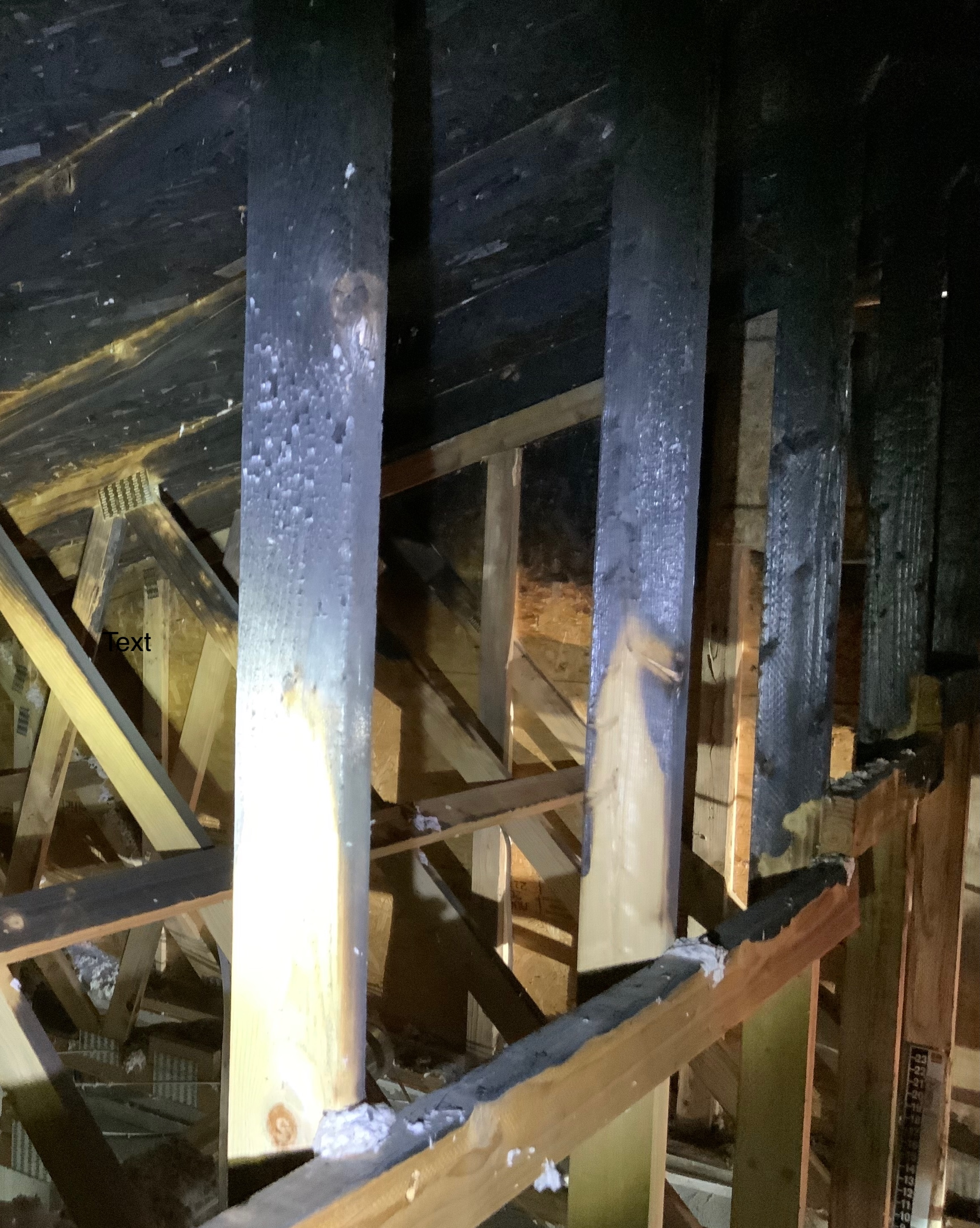
Wood is surprisingly predictable in a fire, but its strength lies in its volume.
- Char as an Insulator: Wood burns from the outside in, creating a char layer that can actually protect the inner core. However, that char represents lost material.
- Reduced Capacity: If a 2×10 joist chars by half an inch on all sides, it no longer has the structural properties of a 2×10. It is effectively a smaller, weaker beam.
- The “Glue” Factor: Modern homes use engineered wood (I-joists and Glulams). The adhesives in these products often fail at temperatures far below the wood’s ignition point, causing beams to delaminate and fail suddenly.
Steel: The Danger of "Creep" and Warping
Many homeowners assume steel is fireproof. While steel won’t burn, it is highly sensitive to temperature swings.
- Strength Loss: At approximately 1,100°F—a common temperature in house fires—steel loses roughly 50% of its yield strength.
- Warping and Creep: Under the weight of a roof or floor, heated steel will “creep” or sag. Once a steel beam has warped or “deflected” due to heat, it cannot simply be hammered back into place; its internal molecular structure has been compromised.
Concrete:The Drying and Spalling Crisis
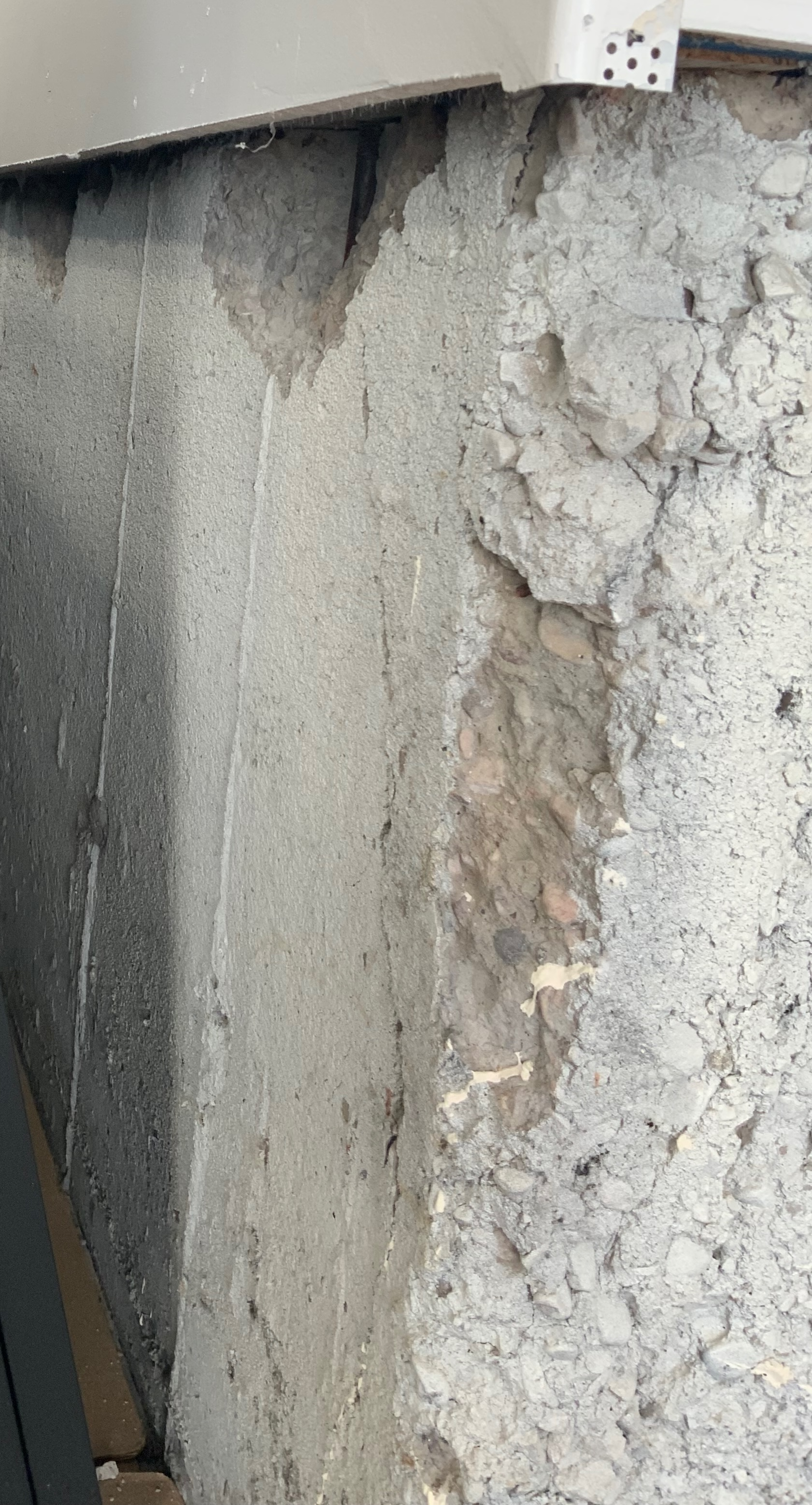
Concrete is often viewed as the ultimate fire-resistant material, but intense heat triggers a chemical breakdown within the foundation walls.
- The Loss of “Free Moisture”: Concrete is a porous material that contains microscopic amounts of water. High heat causes this moisture to evaporate rapidly. Once this “free moisture” is gone, the concrete becomes brittle and loses rigidity.
- Spalling: As moisture turns to steam inside the concrete, it creates internal pressure. This causes the surface to crack, flake, or even “pop” off in chunks—a process known as spalling.
- Cracking: When concrete is cooled rapidly rapidly, the expanded concrete will want to shrink, this is where the cracks can occur.
- Decreased strength of concrete and reinforcement: At temperatures starting around 300° C (572° F) the concrete starts to lose its compressive strength. At higher temperatures substantial strength in the concrete can be lost and steel reinforcement starts to lose strength as well. These occur around temperatures of 600° C (1,112°F).
- Lateral Strength & Anchor Failure: This is the most dangerous aspect of post-fire concrete damage. As the concrete becomes brittle, the anchor bolts—which secure your home’s wooden sill plate to the foundation—can break free. Without these bolts, the home loses its lateral strength and is at risk of sliding off the foundation during a windstorm or seismic event.
Why a Forensic Assessment is Essential
You cannot determine the safety of a home by a visual DIY inspection. A structural engineer uses specialized tools to determine:
- Effective Cross-Section: Measuring how much “good” wood remains.
- Steel Deflection: Checking if beams have deflected beyond safe tolerances.
- Concrete Integrity: Testing the “hardness” and attachment of anchor bolts to ensure the home is still properly tethered to the earth.